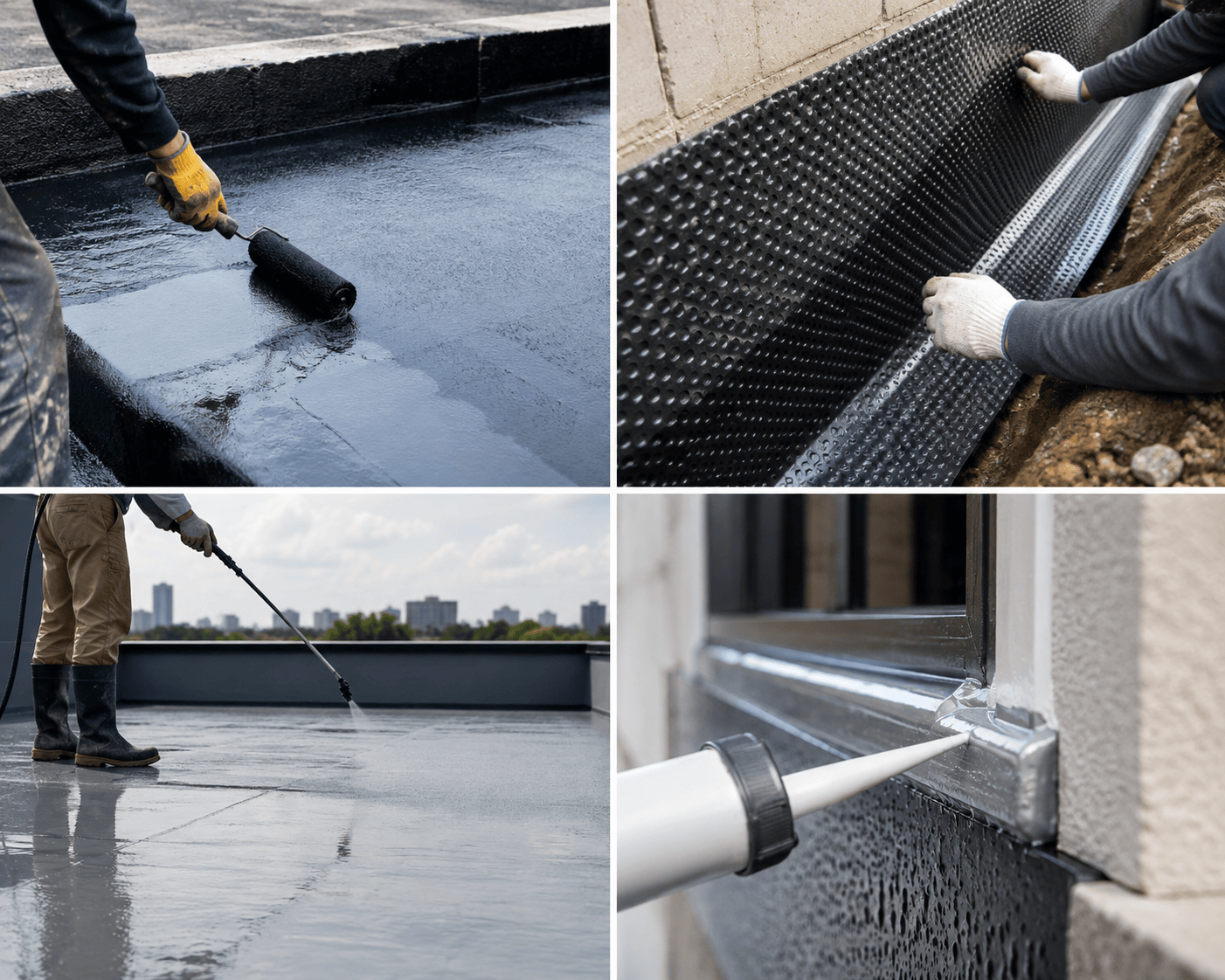
Interior waterproofing controls water from inside your basement. Exterior waterproofing blocks water before it enters the foundation. The right method depends on where the water comes from and how it enters your home.
Both basement waterproofing methods can work well. However, they solve different problems. A professional inspection can help you choose the right waterproofing system for your property.
Interior waterproofing collects water inside the foundation and directs it away from your home. It often uses an interior drain tile system and sump pump.
Contractors usually install the drainage channel below or beside the basement floor. Water flows into the channel and moves toward a sump pit. The sump pump then discharges it outside.
Common interior waterproofing methods include:
Interior basement waterproofing works well for groundwater and floor-level seepage. It can also control water entering through the wall-floor joint.
You may need an interior system if:
Interior work usually causes less disruption around the property. It may also take less time because it does not require full exterior excavation.
However, it manages water after it reaches the foundation. It does not always stop moisture from touching the outside wall. Sump pumps also need routine testing and a reliable power source.
Exterior waterproofing stops water at the outside of the foundation. It protects basement walls before groundwater can enter.
The process usually requires excavation. Contractors expose the affected foundation wall and inspect it for cracks or damage. They then repair the wall and apply a waterproof membrane.
An exterior foundation waterproofing system may include:
Exterior waterproofing may be right when water passes directly through foundation walls. It can also help when an old waterproof coating or footing drain has failed.
Consider this method if:
Exterior waterproofing addresses water at its source. It also allows contractors to inspect the full outside surface of the wall.
However, excavation can disturb lawns, paths, patios, or landscaping. Access may also be difficult on narrow Cleveland lots. The project scope will depend on the soil, excavation depth, and foundation condition.
Water entering through a basement wall may point to cracks, failed coatings, or poor exterior drainage. Exterior crack repair and a waterproof membrane can block this water at the source.
An interior wall drainage system may also collect the water. This can be useful when excavation is difficult.
Floor seepage often relates to hydrostatic pressure. Groundwater rises beneath the concrete slab and pushes through cracks or porous areas.
An interior drain tile and sump pump system can reduce this pressure. It collects the water below floor level and moves it away from the foundation.
The joint where the wall meets the floor is a common entry point. Water may appear there after rain or snowmelt.
An interior perimeter drainage system can capture this seepage. It then carries the water to the sump pit.
Not every damp basement has a foundation leak. Warm air can meet a cold basement surface and create condensation.
A dehumidifier may help with this issue. Better airflow can also reduce moisture. Waterproofing alone may not solve humidity caused by indoor conditions.
A leaking crack may need more than sealant. Wide, horizontal, stair-step, or shifting cracks can point to structural movement.
Waterproofing does not correct foundation settlement or bowing walls. If you see these signs, learn more about our foundation lifting services. A structural inspection should come before cosmetic repairs.
Poor grading can direct rain toward the home. Clogged gutters and short downspouts can create the same problem.
Improving exterior drainage may reduce water intrusion. The ground should direct surface water away from the foundation. Downspouts should also release water at a safe distance.
Start by identifying where and when the water appears. This helps separate groundwater problems from surface runoff, plumbing leaks, and condensation.
Consider these factors:
The timing of the leak also matters. Water after heavy rain may suggest surface drainage or wall problems. Water near the floor after a long wet period may relate to rising groundwater.
Yes. Some homes need both methods for complete moisture control.
An exterior membrane may stop water from passing through the wall. An interior sump pump can manage groundwater below the basement floor. Together, they protect different parts of the foundation.
A combined system may include:
The final design should match your property. Installing more products does not always create a better result. Each part should solve a verified problem.
The cost depends on the work your home needs. A small crack repair will not have the same cost as full excavation or a complete interior drainage system.
Important cost factors include:
Request a written scope before work begins. It should explain the recommended method, materials, drainage route, and areas that need repair.
Quick fixes may hide water damage without solving its cause.
Avoid these common mistakes:
Water can follow hidden paths. The area where you see it may not be the place where it first entered.
Schedule an inspection if you notice:
Uneven floors, sticking doors, and widening cracks may also point to foundation settlement. Our guide to signs your Cleveland home may need foundation lifting explains these warning signs in more detail.
Interior waterproofing controls water from inside your basement. Exterior waterproofing blocks moisture at the outer foundation wall. Some homes benefit from a combination of both.
The right solution depends on the water source, soil drainage, foundation condition, and property access. A detailed inspection removes the guesswork.
Atlas North Structural Foundation & Waterproofing provides foundation and waterproofing solutions in Cleveland, OH. We can assess your basement and explain the options that fit your home.
Call (216) 563-2788 to schedule your waterproofing inspection.